Quick Summary for Buyers
ProASIC PLUS sourcing turns on matching the exact ordering code, because the APA family spans three capacities, two temperature grades, several packages, and leaded versus Pb-free finishes. ZZX Electronics currently stocks a range of APA300, APA600 and APA1000 devices in original sealed Microchip (originally Actel) packaging. These are older-generation flash FPGAs whose long-term availability is uncertain, so the practical buyer questions are which exact code is in stock, what date code and packaging it carries, and how to confirm authenticity. This guide answers those questions and lists every APA ordering code we hold.
What Is the ProASIC PLUS (APA) Family?
The ProASIC PLUS (APA) family is a line of flash-based, non-volatile FPGAs originally developed by Actel, later Microsemi, and now part of Microchip Technology. As flash devices they are single-chip and live-at-power-up, retaining configuration when powered down. The APA family predates the ProASIC3 generation and remains in service in many long-lifecycle industrial and high-reliability systems.
The numeric code indicates approximate logic capacity: APA300 (~300K system gates), APA600 (~600K), and APA1000 (~1M). The remaining characters describe the package, pin or ball count, and temperature grade. Packages in stock include BGA, PQFP, FBGA, and ceramic CQFP for military-grade parts.
A worked example of how to read an ordering code:
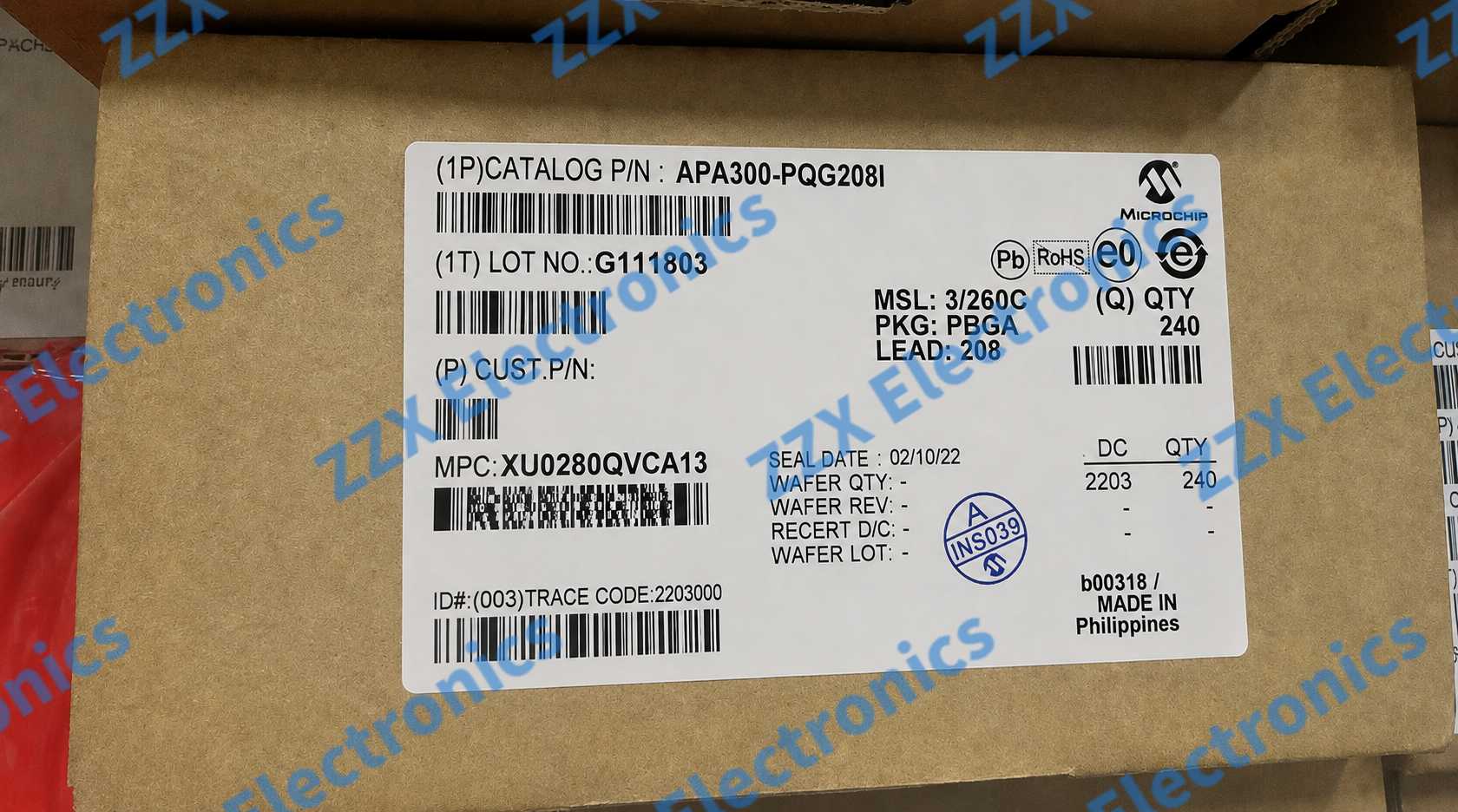
APA300-PQG208I
 APA   = ProASIC PLUS family
 300   = ~300K system gates (capacity tier)
 PQG   = PQFP package, RoHS Green / Pb-free (PQ = standard finish)
 208   = pin count
 I     = Industrial temperature (M = Military, B = ceramic/QML)
In-Stock APA Variants at ZZX Electronics
The table below lists the 14 APA ordering codes ZZX currently holds, with the package, temperature grade, finish, speed grade, on-hand quantity, and date code for each. Each part number links to its product page, where you can request a quote, current pricing, and inspection photos. Quantities and date codes are accurate as of publication and change as stock moves.
| Part Number | Package | I/O–Ball Count | Temperature Grade | Finish | Speed | In Stock (pcs) | Date Code |
|---|---|---|---|---|---|---|---|
| APA1000-BG456M | BGA | 456 | Military (−55…+125°C) | Standard | Std | 7 | 1413 |
| APA1000-PQG208M | PQFP | 208 | Military (−55…+125°C) | Pb-free (Green) | Std | 24 | 2321 |
| APA300-BG456M | BGA | 456 | Military (−55…+125°C) | Standard | Std | 317 | 1942 |
| APA300-FG144I | FBGA | 144 | Industrial (−40…+85°C) | Standard | Std | 35 | 841 |
| APA300-FG256M | FBGA | 256 | Military (−55…+125°C) | Standard | Std | 90 | 1425 |
| APA300-PQ208M | PQFP | 208 | Military (−55…+125°C) | Standard | Std | 33 | 1232 |
| APA300-PQG208I | PQFP | 208 | Industrial (−40…+85°C) | Pb-free (Green) | Std | 120 | 2203 |
| APA300-PQG208M | PQFP | 208 | Military (−55…+125°C) | Pb-free (Green) | Std | 360 | 2230 |
| APA600-BG456M | BGA | 456 | Military (−55…+125°C) | Standard | Std | 72 | 1827 |
| APA600-CQ208B | CQFP (ceramic) | 208 | Military (ceramic/QML) | — | Std | 5 | 2011 |
| APA600-FG256M | FBGA | 256 | Military (−55…+125°C) | Standard | Std | 90 | 2128 |
| APA600-PQ208I | PQFP | 208 | Industrial (−40…+85°C) | Standard | Std | 86 | 1129 |
| APA600-PQG208I | PQFP | 208 | Industrial (−40…+85°C) | Pb-free (Green) | Std | 41 | 2050 |
| APA600-PQG208M | PQFP | 208 | Military (−55…+125°C) | Pb-free (Green) | Std | 178 | 2124 |
Choosing the Right APA Variant
Several axes in the APA ordering code change the part in ways that matter to a buyer:
- Capacity (300 / 600 / 1000) sets available logic and I/O; a larger device is not interchangeable with a smaller one for a fitted design.
- Temperature grade — Industrial (I, −40…+85 °C) versus Military (M, −55…+125 °C); ceramic CQFP parts (B) target the most demanding screening.
- Finish — the additional “G” (PQG versus PQ) denotes a RoHS-compliant Green / Pb-free package, affecting RoHS compliance and reflow.
- Package — BGA, PQFP, FBGA and ceramic CQFP differ in footprint, assembly, and ruggedness.
Because these axes affect form, fit, and qualification, buyers should source the exact ordering code their bill of materials or qualification specifies, rather than a near neighbor. ZZX can confirm which exact codes are in stock and supply documentation for each.
Lifecycle Considerations
The ProASIC3 and ProASIC PLUS generations of flash FPGAs have been affected by manufacturing transitions announced by Microchip over the years. Selected ordering codes within these families have been moved to discontinued or end-of-life status, while others remain available through various channels. The specific lifecycle status of any individual APA ordering code can change and should be verified with Microchip or authorized distributors before a sourcing decision.
In practice this means long-term availability of legacy APA parts is uncertain, and buyers planning multi-year production should treat current stock as a finite resource and confirm status directly with the manufacturer.
Current ProASIC PLUS Sourcing Challenges
As an older flash FPGA generation, APA parts are scarce through authorized channels and largely sourced on the broker market. That market carries real risks: refurbished or remarked devices, mixed lots and date codes from multiple origins, and shallow stock that moves quickly. Dependable ProASIC PLUS sourcing depends on confirming the exact ordering code, verifying lot and date code, and inspecting packaging before committing.
Verifying APA Authenticity
Authenticity verification for the APA family has a few family-specific points worth checking before you buy:
- On BGA and FBGA packages, inspect ball-array geometry and coplanarity and look for reballing or rework marks.
- On PQFP packages, check lead coplanarity and look for re-tinning or re-forming.
- On ceramic CQFP (military) parts, confirm the lid seal and cavity markings are intact and consistent with the lot.
- Read the date code as a four-digit YYWW value and confirm it matches the packaging; expect legacy Actel, Microsemi, or Microchip branding depending on the era, which is normal for this family.
These checks are specific to the APA family. For the full step-by-step authentication process that applies to any obsolete IC, see our guide: how to verify authenticity of obsolete ICs.
Procurement Notes for the APA Family
APA devices appear in industrial control, aerospace and defense, and other long-lifecycle high-reliability systems. For a short-term repair or last-time build, the priority is verified authenticity and immediate availability. For a longer program, the priority shifts toward securing sufficient quantity from a consistent lot with documented traceability, given the uncertain long-term supply of these parts.
For a full framework on weighing short-term repair needs against long-term program risk, see our guide: procurement strategies for obsolete components.
A Note on Engineering Migration
For long-term designs, customers may need to evaluate newer FPGA families based on official manufacturer documentation. ZZX Electronics does not provide engineering migration certification. Any replacement, redesign, or qualification decision should be verified by the customer’s engineering team. Please refer to the manufacturer’s official lifecycle and migration documentation for technical guidance.
How ZZX Electronics Can Support Your APA Sourcing
ZZX Electronics is an independent distributor focused on obsolete and hard-to-find components. For the ProASIC PLUS family we can help with the following, drawing on our FPGA inventory and direct handling of these Microchip FPGAs:
- Hard-to-find APA sourcing and stock availability checks across all in-stock ordering codes
- Inventory verification with photos, lot and date-code traceability
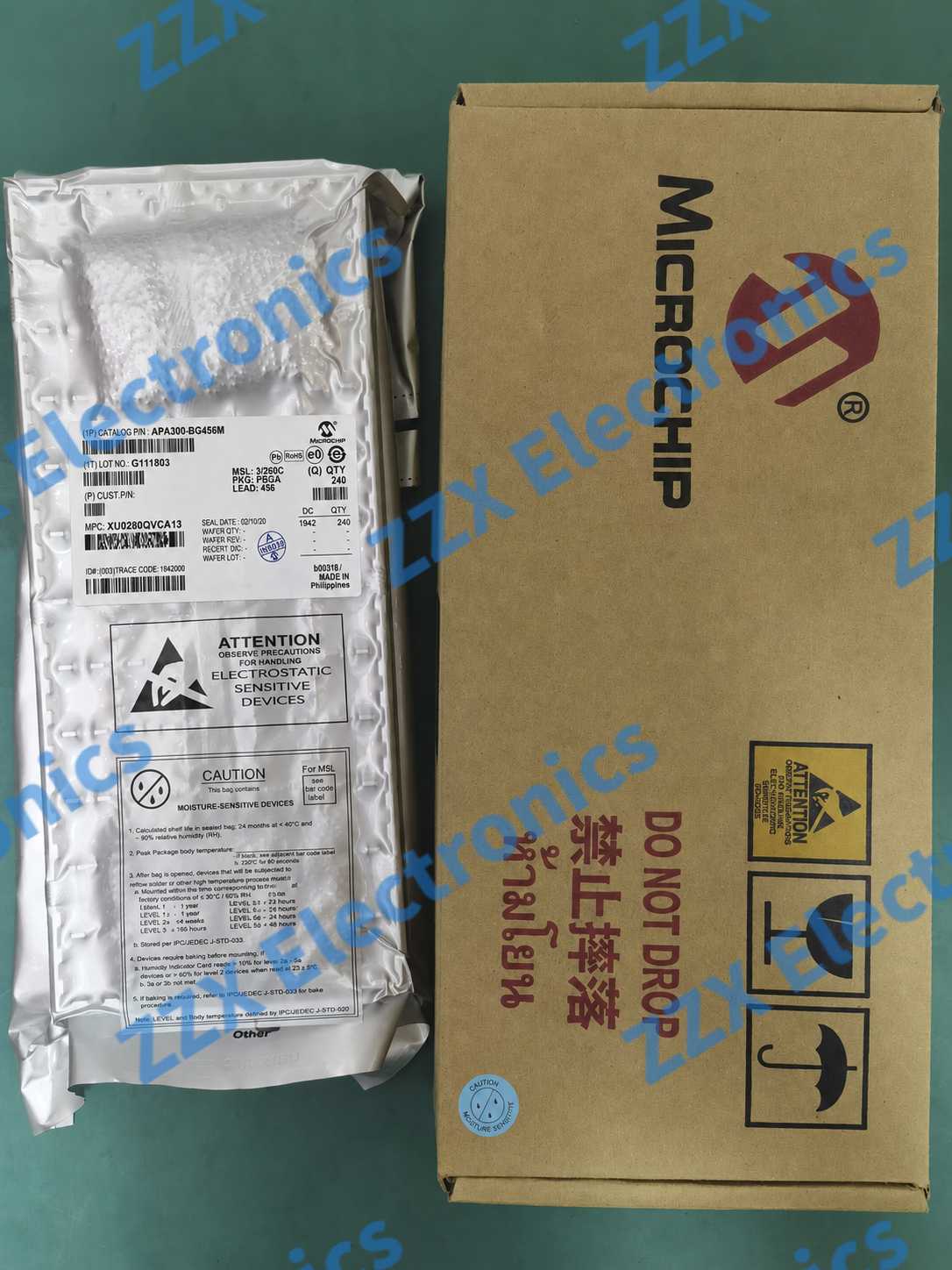
- Original sealed-packaging confirmation and inspection photos on request
- Sample-order coordination and documentation support (COC / COA / inspection reports)
- Procurement risk consultation for legacy programs
To move forward you can: (1) request a stock availability check for a specific APA ordering code, (2) request inspection photos for a part you are evaluating, or (3) request a sample for evaluation.
Disclaimer
Disclaimer. This article is based on publicly available manufacturer documentation and ZZX Electronics’ sourcing experience. It does not constitute engineering certification or a guarantee of component compatibility. ZZX Electronics serves as an independent sourcing partner for obsolete and hard-to-find components. We do not certify replacements on behalf of original component manufacturers. Any decisions regarding component selection, redesign, migration, or qualification must be made and verified by the customer’s engineering team under their specific application conditions. Inventory quantities, lot codes, and date codes referenced in this article reflect verified information at the time of publication and are subject to change.