Why Obsolete IC Authenticity Matters
Confirming obsolete IC authenticity before you buy is one of the most valuable checks a procurement team can run. When a component is active and widely stocked, buyers can order from an authorized distributor and move on. Obsolete and hard-to-find parts are different. Once a device reaches end-of-life and authorized stock runs out, demand shifts to the open market — and the open market is where re-marked, reclaimed, and counterfeit parts concentrate. The harder a part is to find, the stronger the incentive for a bad actor to pass off something that is not what it claims to be.
For procurement teams maintaining legacy systems, the cost of a counterfeit is rarely just the price of the part. A non-functional or out-of-spec device can mean failed production runs, field returns, or a grounded system in industrial, medical, or aerospace applications. Verification is cheap insurance against an expensive failure, which is why treating obsolete IC authenticity as a formal step pays off.
This guide walks through the seven-step process ZZX Electronics uses to assess obsolete IC authenticity on every lot we handle. Buyers can use the same workflow to evaluate any supplier’s material before committing to a purchase. None of these steps require a laboratory for the first pass — most can be done with good photographs, a loupe, and attention to detail.
A seven-step authentication workflow
Authentication is a layered process. No single check is conclusive on its own; confidence in obsolete IC authenticity comes from multiple independent signals agreeing. Work through these in order, and treat any unexplained inconsistency as a reason to pause, not to proceed.
1. Packaging and seal integrity
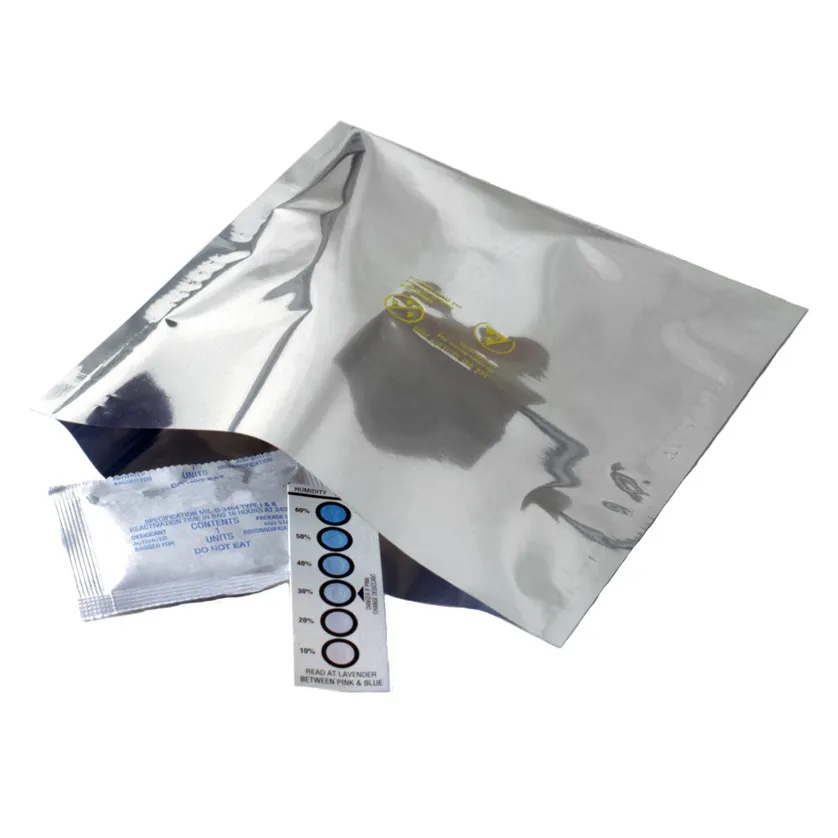
The first signals of obsolete IC authenticity appear before the parts are out of the box. Genuine factory-sealed components arrive in a moisture-barrier bag (MBB) containing desiccant and a humidity indicator card (HIC), inside ESD-safe outer packaging, on the original tray or reel with manufacturer labels.
Look for an intact factory seal rather than a re-sealed or re-heated bag edge; a HIC whose indicator dots have not changed color beyond their threshold (a tripped HIC signals moisture exposure); reel or tray labels whose part number, quantity, and date code match the parts inside and each other; and outer-carton labels consistent with the inner labels.
A re-sealed bag, a missing or color-changed HIC, or labels that disagree with each other are early warnings that the lot has been opened, repackaged, or assembled from mixed sources.
2. Reading the MSL label
Most plastic-encapsulated ICs are moisture-sensitive devices, and their packaging carries a Moisture Sensitivity Level (MSL) label defined by IPC/JEDEC standards — J-STD-020 for classification and J-STD-033 for handling. For authentication, the label is useful in two ways: it tells you how the part should have been stored, and its presence and consistency are themselves a genuineness signal.
A typical label states the MSL level and the peak reflow temperature it was rated against — for example, “MSL 3 / 260°C.” MSL levels run from 1 (least sensitive) to 6 (most sensitive), with shorter allowable floor life as the number rises:
| MSL | Floor life out of the bag (at 30°C / 60% RH or below) |
|---|---|
| 1 | Unlimited (no dry pack required) |
| 2 | 1 year |
| 2a | 4 weeks |
| 3 | 168 hours |
| 4 | 72 hours |
| 5 | 48 hours |
| 5a | 24 hours |
| 6 | Bake mandatory before use (time on label) |
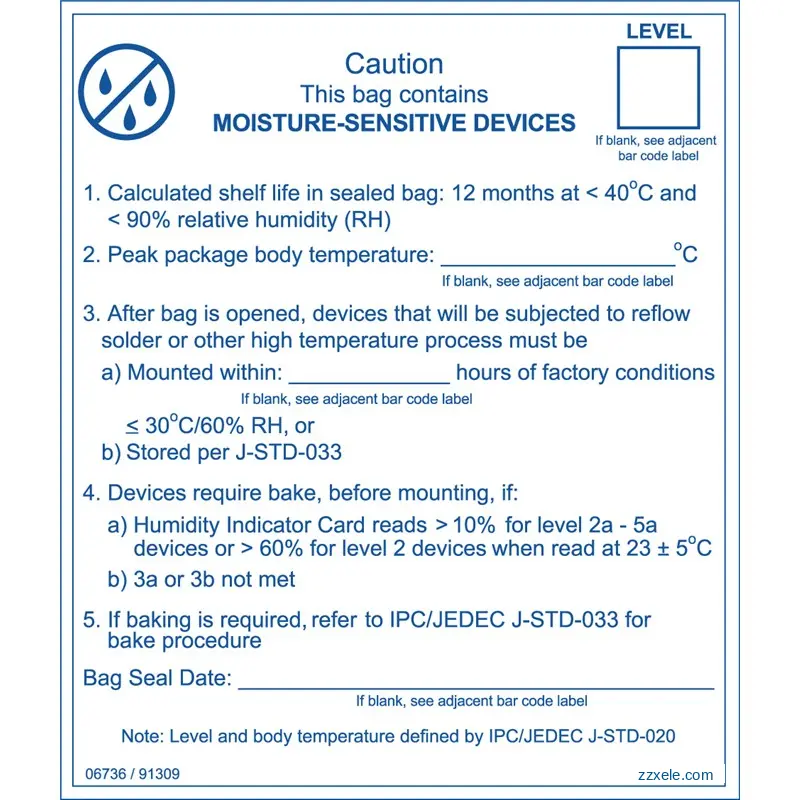
Red flags at this step: a missing MSL label on a plastic surface-mount part that should carry one; an MSL level that does not match the package type; or a tripped HIC paired with a still-sealed-looking bag, which suggests the bag was opened and re-sealed. Note that if floor life has been exceeded or the HIC is tripped, genuine parts can often be recovered by baking per J-STD-033 — but that is a handling fact, not an authenticity guarantee.
3. Top-side marking and laser-mark inspection
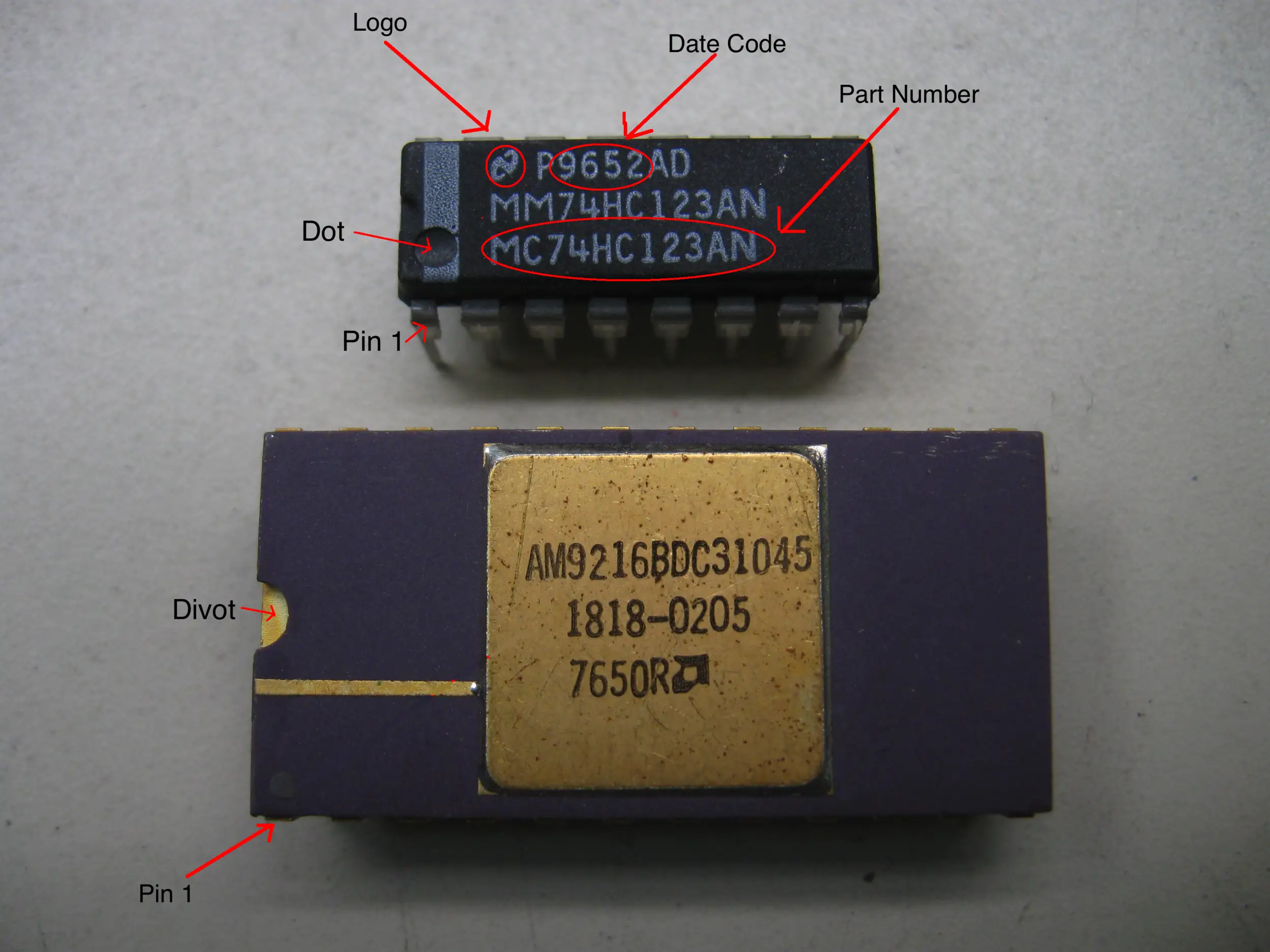
The top-side marking is where most re-marking fraud shows up, and where obsolete IC authenticity is most often compromised. Counterfeiters sand or chemically strip the original marking, apply a new surface coat (a practice called “blacktopping”), and then laser or ink a more desirable part number on top.
Inspect under magnification and raking light for: surface texture that differs from a known-genuine sample, since blacktopping often looks matte, grainy, or painted next to the molded plastic around it; marking that sits on top of the surface rather than being cleanly ablated into it; ghosting of an older marking underneath the current one; logo, font, and character spacing that differ from the manufacturer’s known style; and, on a sacrificial sample only, a surface that smears under a gentle solvent wipe — a genuine molded mark does not smear, while a re-marked coating may.
Compare against a confirmed-genuine unit or the manufacturer’s marking documentation whenever possible.
4. Date code and lot traceability
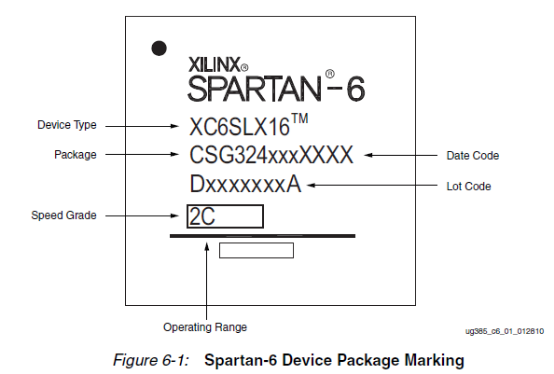
The date code is usually a four-digit code in YYWW format — the last two digits of the year followed by the two-digit work week. “2133,” for instance, reads as the 33rd week of 2021. Lot codes accompany the date code and tie the units to a specific production run.
Two checks matter here. First, consistency across the lot: every unit in a single sealed lot should share the same date code, or a tight range. A shipment that mixes widely scattered date codes is a strong sign of reclaimed material aggregated from multiple sources — common with obsolete parts pulled from decommissioned boards.
Second, consistency between the date code and the brand era. Many obsolete parts changed hands through acquisitions, and the branding on the package should match the claimed production date. For example, Actel parts became Microsemi after 2010 and Microchip after 2018; PLX Technology parts became Avago after 2014 and Broadcom after 2016. A package carrying an “Actel” logo but a date code from well after the Microsemi transition deserves a closer look.
5. Lead, ball, and package inspection
The physical terminals carry strong authenticity signals, and what to look for depends on the package.
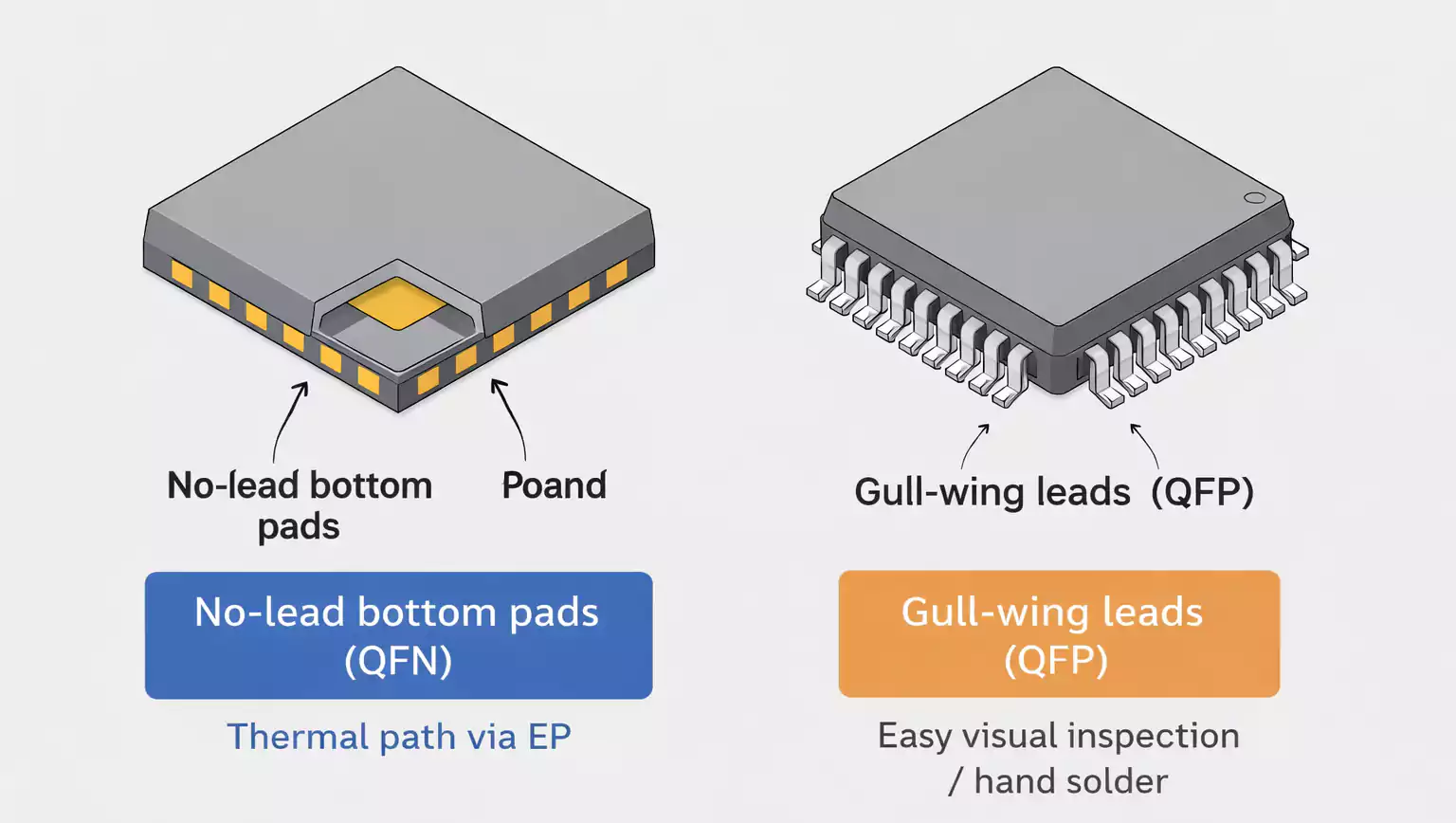
For leaded packages such as QFP and SOIC, check lead coplanarity and surface condition. Genuine new leads are uniform and cleanly plated. Bent leads, uneven coplanarity, or a re-tinned appearance — dull, uneven, or with excess solder — suggest the part was previously soldered into a board and reclaimed.
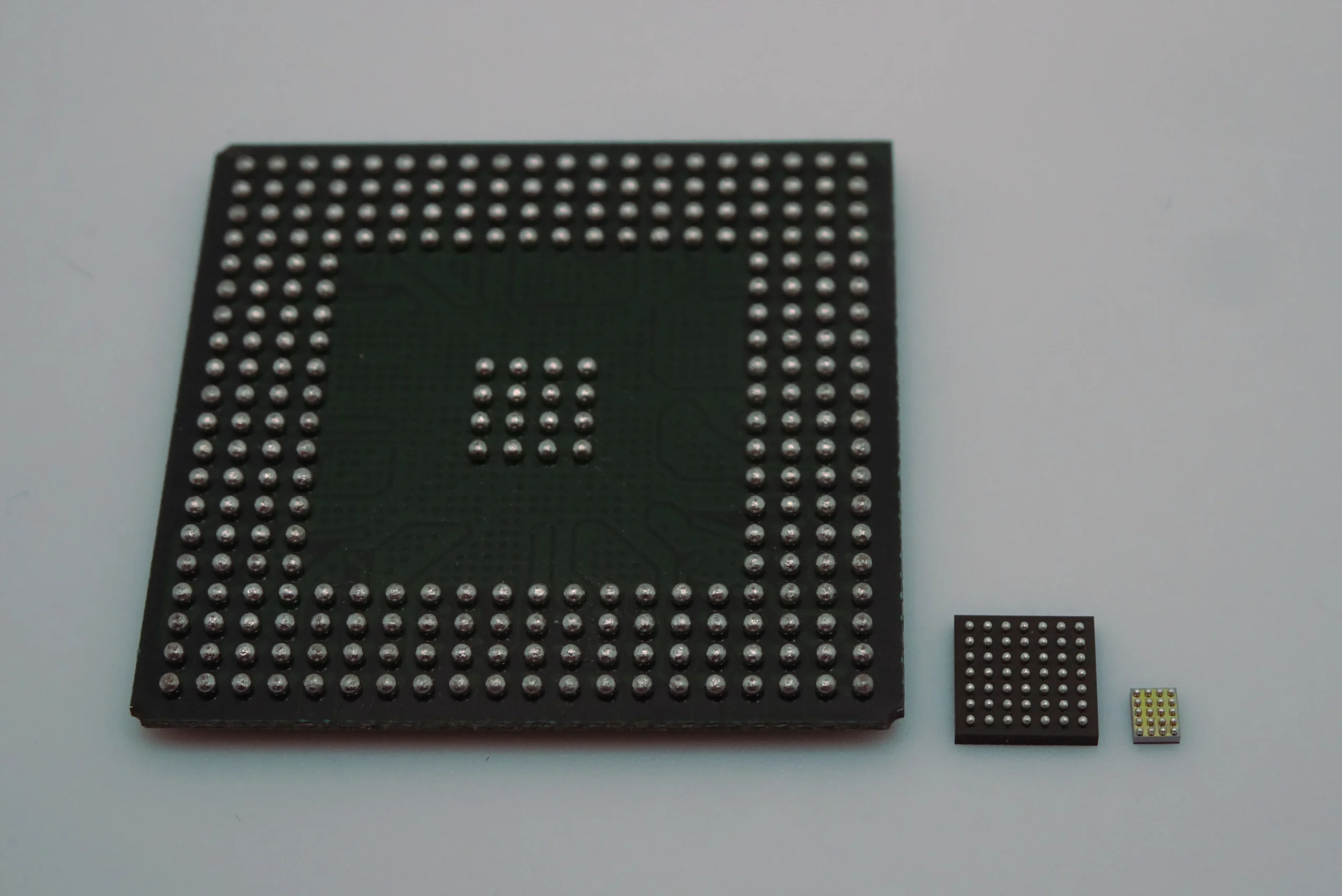
For ball grid array (BGA) packages, examine the ball side. Genuine factory balls are uniform in size, geometry, and alignment. Reballed parts, whose original balls were removed and replaced, often show irregular ball size, misalignment, oxidation, or flux residue inconsistent with new packaging.
Across all package types, the molded body should be free of sanding marks, filler, or surface coats, and any pin-1 indicator should be molded in rather than printed over a re-coated surface.
6. Advanced verification: X-ray, decapsulation, and material analysis
When the visual checks raise questions, or when the application is high-risk enough to justify it, escalate to laboratory methods.
X-ray reveals the internal die and lead frame without opening the package; it can expose an empty cavity, a wrong-sized die, or internal construction inconsistent with genuine units. Decapsulation chemically opens the package to expose the die for direct inspection of die markings and layout, and is destructive, so it is done on samples. XRF (X-ray fluorescence) checks the elemental composition of leads and plating, which is useful for confirming RoHS status and catching re-tinning. Electrical and functional test confirms the part actually performs to its datasheet, which marking inspection alone cannot establish.
These methods require equipment and are typically outsourced to an independent test lab. They are not necessary for every purchase, but they are the definitive layer when the stakes are high or earlier steps are inconclusive.
7. Documentation and provenance
Finally, evaluate the paperwork and the supplier. Ask for a Certificate of Conformance (COC) and, where available, a Certificate of Analysis (COA); traceability to the source where the supplier can provide it; and clear photographs of the actual lot — not stock images — including packaging, labels, and representative units.
For mature obsolete parts, complete original-channel documentation is not always available, and its absence is not by itself proof of a problem. In those cases, a credible supplier-issued inspection report becomes the primary record. What matters is that the supplier is transparent about what they can and cannot document, and willing to provide samples and photographs before you commit.
Quick red-flag checklist
Use this as a fast obsolete IC authenticity screen before purchase. Any single item is a reason to ask questions; several together are a reason to walk away.
- Re-sealed moisture-barrier bag or tripped humidity indicator card
- Missing, mismatched, or implausible MSL label
- Marking that looks painted, matte, or ghosted, or that smears under solvent on a test unit
- Logo, font, or character spacing that differs from the manufacturer’s known style
- Mixed or widely scattered date codes within one lot
- Brand on the package inconsistent with the claimed date code
- Re-tinned leads, or reballed and irregular BGA balls
- Sanding marks, filler, or a surface coat on the package body
- No COC or COA, and no willingness to provide lot photos or samples
- A price far below the prevailing market for a genuinely scarce part
When to escalate to laboratory testing
Run these obsolete IC authenticity checks on every purchase. Add X-ray, decapsulation, XRF, or electrical test when the part feeds a safety-critical or high-reliability system, when the order value is large, when the supplier is unfamiliar, or when any earlier step produced an inconsistency you could not explain. The cost of lab-testing a sample is small next to the cost of a counterfeit reaching production.
How ZZX Electronics applies this process
ZZX Electronics is an independent sourcing partner for obsolete and hard-to-find components. Every lot we offer is evaluated against the workflow above to confirm obsolete IC authenticity, and we provide photographs of the actual packaging, labels, and units — together with date code and lot information — so buyers can run their own checks before purchasing.
You can see this process applied to specific parts in our sourcing reports, such as the PEX8509-AA25BIG, where BGA ball inspection is the key physical check, and the APA300-PQG208I, where QFP lead coplanarity matters most. For the full range of devices we carry, see our integrated circuit inventory.
When obsolete IC authenticity is critical to your build, you can request inspection photographs, lot and date code details, or a sample for your own engineering evaluation before placing a bulk order.
Disclaimer
This guide is based on publicly available industry standards (including IPC/JEDEC J-STD-020 and J-STD-033) and ZZX Electronics’ sourcing and inspection experience. It is intended as general procurement guidance and does not constitute engineering certification, a qualification decision, or a guarantee of component authenticity or performance in any specific application.
ZZX Electronics serves as an independent sourcing partner for obsolete and hard-to-find components. We do not certify parts on behalf of original component manufacturers. Any decision regarding component acceptance, qualification, or use must be made and verified by the buyer’s own engineering and quality teams under their specific conditions. Inspection findings and documentation reflect information available at the time of inspection and are subject to change.